
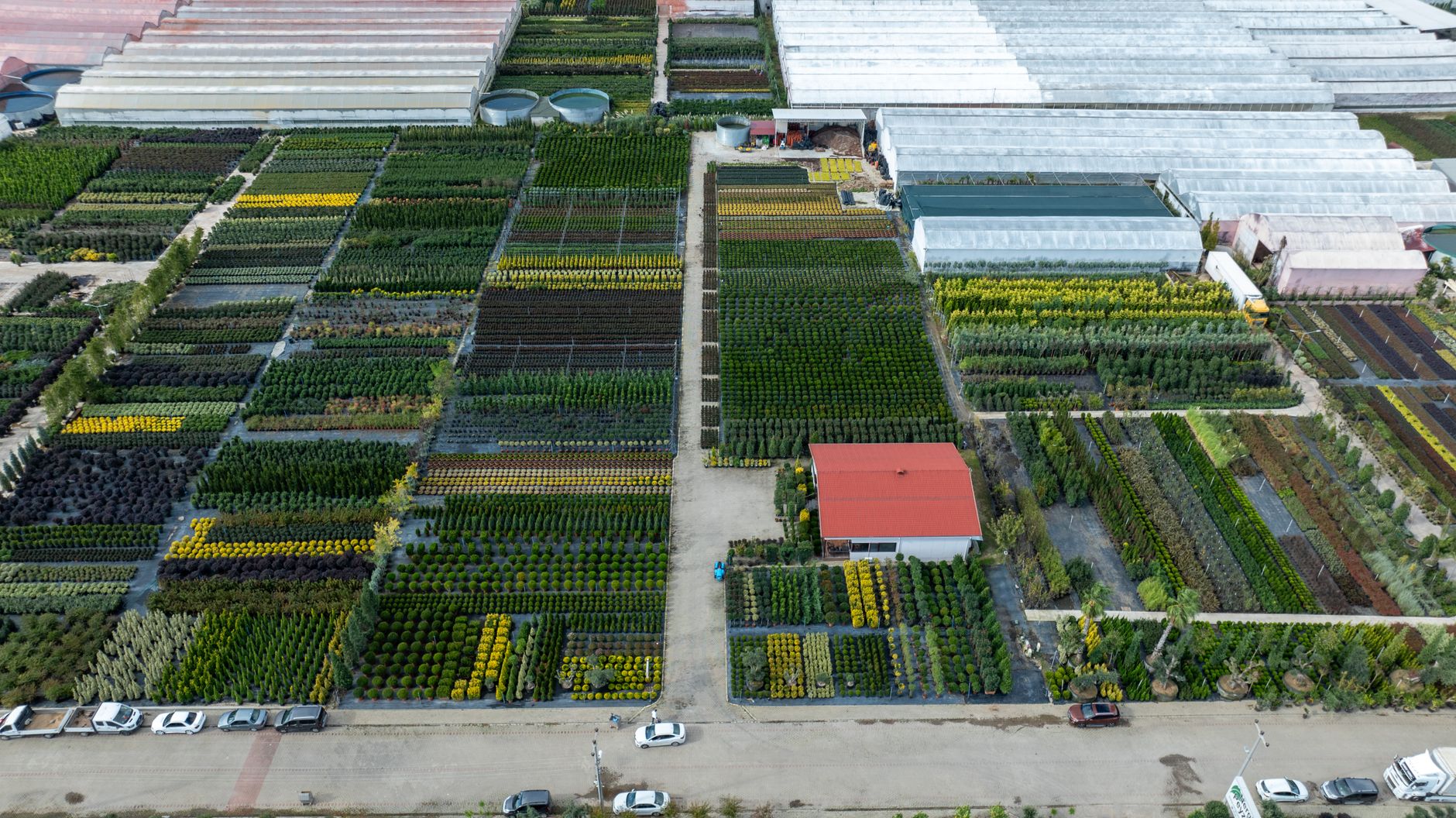
The subtropical climate surrounding Alanya allows for a nearly uninterrupted harvest: bananas ripen several times a year, citrus fruits are gathered from autumn through spring, and greenhouse vegetables are grown year-round along the coastline stretching from Demirtas to Okurcalar. Our region, alongside Anamur, is considered one of Turkey’s primary banana production hubs; the greenhouses lining the D400 highway have become an iconic part of the landscape for those traveling toward Gazipasa.
The secret to this abundance lies in the combination of mild winters—which rarely see severe frost—and hot, humid summers. This is a rare combination for Turkey; while similar conditions can be found in Antalya and Mersin, the wind-sheltered valleys at the foot of the Taurus Mountains make Alanya the standout location for banana plantations and intensive greenhouse farming.
What grows around Alanya
As you travel from the city center toward Demirtas or Okurcalar, the banana plantations on both sides of the road catch the eye—these low-growing plants with large leaves, covered in plastic sheeting during winter, are not just a lush green sight; they are fully operational agricultural enterprises. Turkish bananas are grown precisely here and in Anamur, holding a significant share of the domestic market.
In areas closer to the mountains and along river valleys, citrus orchards featuring oranges, mandarins, and lemons stretch out. The ripening season lasts from the end of autumn until early spring; this is why winter is the time when citrus is at its most affordable and fragrant in Alanya’s markets. In the coastal areas, particularly around Kargicak, Turkler, and Avsallar, you will find greenhouses where tomatoes, cucumbers, peppers, and eggplants are grown year-round—a portion of this produce is even exported to Europe.
Newcomers: avocados and pomegranates
In recent years, producers around Alanya have started experimenting with avocados—the climate is favorable, and demand in the local market is steadily rising. It is not yet a ubiquitous crop, but you can increasingly find locally grown fruit alongside avocados from Antalya in the markets. Pomegranates ripen in the autumn and remain one of the most accessible seasonal fruits in the region—sold on almost every street corner in October and November.
Seasonal calendar: what is harvested each month
By observing the market stalls, we can roughly summarize Alanya’s annual cycle. Of course, this calendar is not set in stone, as some variations occur depending on the year's weather, but the general logic remains consistent from season to season.
- January — peak citrus season: oranges, mandarins, lemons; greenhouse vegetables continue to grow despite the cooler air
- February — mandarins and oranges are still at great prices; the first early strawberries begin to appear from protected areas
- March — strawberries are in full season, while citrus begins to fade
- April — fresh greens, radishes, baby potatoes, the first cherries
- May — cherries and apricots, greenhouse tomatoes and cucumbers at their best
- June — peaches, nectarines, the first watermelons and melons
- July — peak season for watermelons, melons, figs, and early grape varieties
- August — figs, grapes; pomegranates begin to appear toward the end of the month
- September — late grapes, pomegranates, the first of the early-ripening citrus varieties
- October — pomegranates at their peak, new season banana harvest begins, tropical fruit season opens with festivals
- November — persimmons, pomegranates, the first mandarins
- December — mandarins and oranges start to sweeten; the main citrus season truly begins
Bananas stand a bit apart in this calendar: thanks to greenhouses and sheltered plantations, they are harvested several times a year, making it possible to find local bananas in markets almost anytime, not just in the autumn.
Where to find markets, festivals, and fresh produce
Every neighborhood in Alanya has its own designated market day—for example, one of the large central markets is held on Tuesdays, while other neighborhoods host them on Fridays. The schedule changes by neighborhood (Oba, Cleopatra, Tosmur), so the easiest method is to ask your neighbors or follow local neighborhood WhatsApp groups. In these local markets, seasonal fruits and vegetables are significantly cheaper than in supermarkets—the price difference for locally grown produce can be as much as double.
Every autumn, Alanya hosts a Tropical Fruit Festival; producers showcase harvests of bananas, avocados, papayas, and other crops, while local musicians perform in the evenings. At this year's festival, Ayhan Sicimoglu performed with the Harikalar Bandosu—the event has evolved beyond a mere market day into a cultural gathering, though visiting the festival remains the best way to taste fresh harvests firsthand.
Let's be honest: there are drawbacks too
Despite this bountiful picture, seasonality continues to dictate prices and variety: if you see fresh strawberries or cherries in winter, be aware that these are high-priced greenhouse products, not a local harvest. In summer, intense heat and humidity cause fruits and vegetables to spoil faster; therefore, it is wiser to shop in small quantities and, if possible, in the morning hours before the produce has sat in the sun all day.
Some greenhouse operators may use more pesticides than buyers looking for organic produce would prefer—there is almost no separate "organic" certification in ordinary markets, so your trust relies largely on the reputation of the seller. Another point: some products considered exotic for the region (non-strawberry wild berries, certain nuts, specific types of greens) usually arrive from other parts of the country or abroad, and their prices are not tied to the local season. Finally, something that might seem unusual for those moving from northern countries: classic "winter vegetables" like cabbage or beets are not the main crops here—they are grown in smaller quantities and not year-round, but only during specific periods.
A house with a garden: a lifestyle choice
For those considering a property with a garden purely for the sake of fresh produce, the climate around Alanya is well-suited for starting a small personal garden—a lemon or mandarin tree, a few banana stools, or a corner dedicated to greens will thrive for most of the year, even without a greenhouse. Villas with gardens in areas like Demirtas, Kargicak, or Avsallar are often designed with exactly this lifestyle in mind: some homeowners plant fruit trees not for commercial sale, but for their own enjoyment. If you would like to explore property options with gardens suitable for this purpose, you can find listings in these very regions in our NewTime Investment real estate catalog.
In summary: how to navigate the seasons
The easiest way to follow the harvest is to keep an eye on neighborhood markets—the prices and variety there honestly reveal what is truly in season and what has been brought in from afar. It is worthwhile to visit the tropical fruit festival in autumn, stock up on citrus in winter, and buy watermelons and figs in summer when they are at their most affordable.
Frequently Asked Questions
Do bananas really grow in Alanya? Yes, our region is one of Turkey’s largest banana suppliers alongside Anamur; you can see the plantations directly along the road toward Demirtas and Gazipasa.
When are fruits and vegetables cheapest in Alanya? Generally, during the period that coincides with the peak harvest of that specific product—summer for watermelons and figs, winter for citrus, and spring for strawberries and cherries.
Is it possible to find organic vegetables in ordinary markets? There is almost no official "organic" label in neighborhood markets; it is safer to rely on reliable sellers you know or to seek out specialized organic markets if they are available in your area.
Is it worth setting up my own garden in my home in Alanya? The climate is almost perfectly suited for growing citrus, pomegranates, and various greens without a greenhouse; therefore, transforming your villa's garden into a small personal orchard is a very sensible option.