
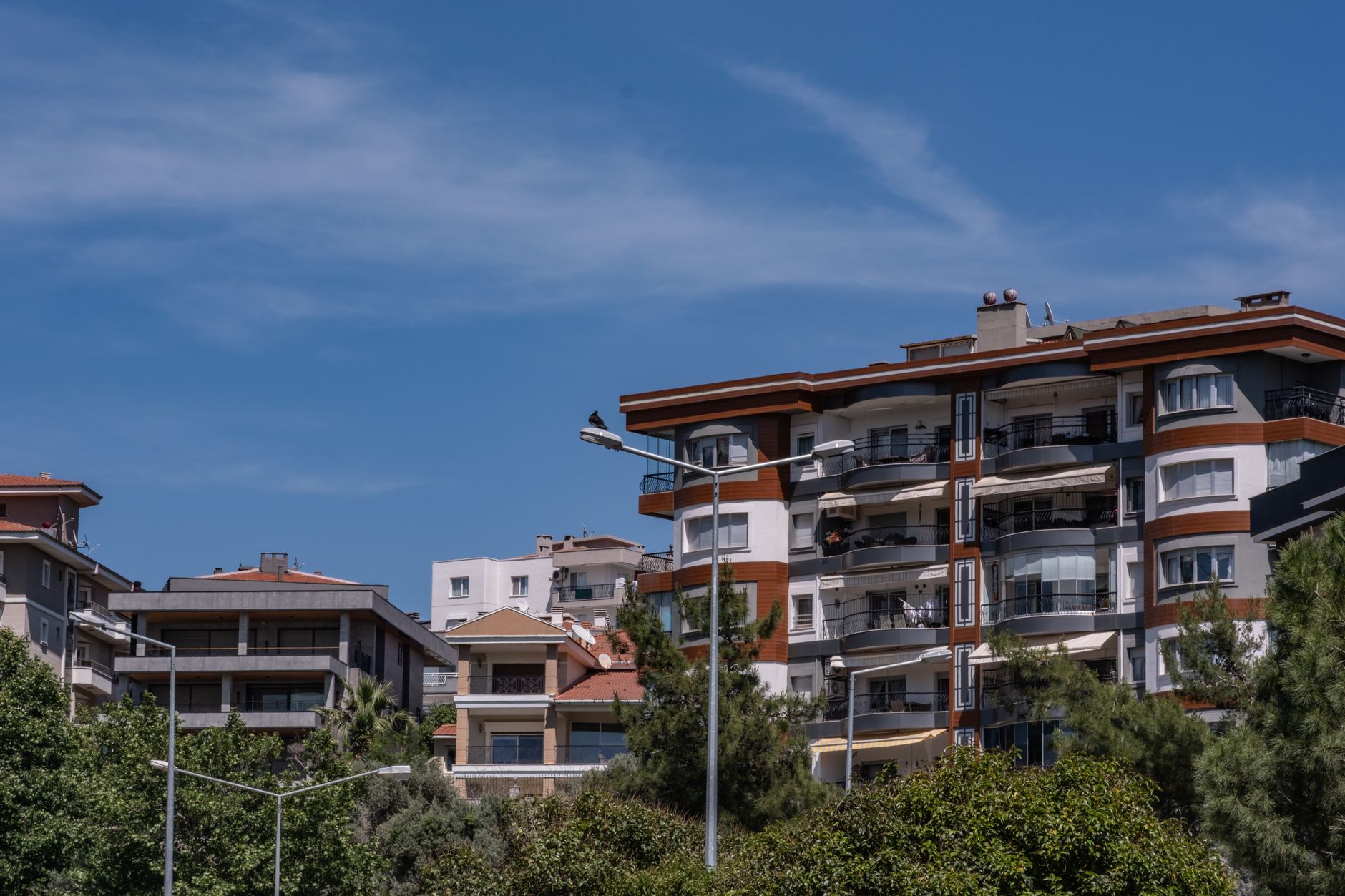
A property transaction in Turkey is more transparent than its reputation suggests: title passes only under an official deed signed at the land registry office, and money and paperwork move in a comprehensible sequence. The risk comes not from the procedure itself but from the steps around it — the developer contract, the deposit, the currency transfer and the due diligence on the property. What follows is a step-by-step walkthrough with the requirements as they stand in 2026.
Who can buy and what the restrictions are
Citizens of most countries may acquire residential and commercial property in Turkey in their own name; the reciprocity requirement was abolished more than a decade ago. Restrictions remain in three areas: you cannot acquire property in military prohibited zones or security zones; a single foreign individual may hold no more than 30 hectares nationwide; and foreign acquisitions within any one district may not exceed 10% of that district's privately held land.
Separately, keep in mind the restrictions on "closed" neighbourhoods (mahalle): these concern not the purchase but address registration and the residence permit. The list is revised regularly by the Directorate General of Migration Management (Göç İdaresi), so check it immediately before the transaction rather than relying on articles a year old.
Step 1. Choosing the property and vetting the seller
Before any money changes hands you need to establish three things: who is selling, what exactly is being sold, and whether anything is registered against the property.
- The seller. Match the name on the tapu (title deed) against the passport. If a representative is acting, study the power of attorney (vekâletname): its validity period, the scope of authority, the right to receive money. When buying from a developer, check the company: completed projects, permits in place, litigation history.
- The property. Type of title (kat mülkiyeti, full ownership of the unit, or kat irtifakı, a construction servitude), the designated use of the premises, the floor area on the plans, the floor and the unit number. How to read the document is covered in our guide on the tapu in Turkey.
- Encumbrances. Ask the seller to grant you access to the extract through Web-Tapu (the land registry's online portal) or to obtain it at the registry office. A mortgage or an attachment order travels with the property.
- Permits. Whether the building holds an occupancy permit (iskân), and whether there are municipal enforcement notices or departures from the approved project.
- Debts attached to the property. Arrears on property tax, utilities and building maintenance charges (aidat) — request clearance certificates so you are not untangling them after completion.
Step 2. The contract and the deposit
Turkey uses two fundamentally different types of contract, and the difference between them is a difference in protection.
Satış vaadi sözleşmesi before a notary
A promise-to-sell contract (taşınmaz satış vaadi sözleşmesi) must take an official form — it is executed before a noter (notary). Such a contract can be registered as an annotation (şerh) on the register: the property then cannot be quietly sold to a third party, and you acquire grounds to demand transfer through the courts. The annotation runs for a limited period and is removed automatically by the registry if the sale has not taken place by then.
A simple written contract
A contract signed by the parties without a notary creates no ownership rights and does not appear on the register. It can be useful for recording commercial terms, but it offers nothing like the protection of a notarised promise to sell. For an off-plan purchase, or wherever time elapses between the deposit and the signing, going to a noter is the sensible course.
The deposit
The deposit (kapora) is usually paid once the price has been agreed and before the documents are gathered. In the contract or the receipt, record the exact amount and currency, the deadline for completing, the conditions for a refund (for example, if an encumbrance comes to light or an approval is not granted), and who pays the duties and fees. A large deposit with no written refund terms is the single most common way buyers lose money.
Step 3. Tax number and bank account
A tax number (vergi numarası) is needed for almost everything: opening an account, registering the tapu, setting up utility subscriptions. Foreign nationals obtain a potential tax number online through the digital tax office using their passport details, or at a tax office in person. More detail in our guide to the Turkish tax number.
An account with a Turkish bank is needed to convert currency and obtain the supporting paperwork, and later to pay utilities and taxes. Banks' documentation requirements differ and are periodically tightened; as a rule they ask for a passport, a tax number, an address and proof of source of funds. See our article on opening a bank account in Turkey.
Step 4. Valuation report and DASK
The valuation report. Transactions involving foreign nationals require a valuation report prepared by a firm licensed by the capital markets regulator (SPK). It is ordered through the Web-Tapu system. The report has a limited period of validity, and the rules for issuing it have shifted in recent years: applications under the investment citizenship route use a separate amount-confirmation document (Tutar Tespit Belgesi, TTB) with its own validity period. Confirm the current procedure and deadlines with TKGM before ordering, so that the report does not expire before your signing date.
DASK. Compulsory earthquake insurance is taken out on the property before completion. Without a valid policy the registry will not process the transfer, and utility providers will not open subscriptions.
Step 5. Money: transferring currency and the mandatory conversion
This is the area where outdated advice from the internet does the most damage.
Conversion through a bank and the DAB certificate. Since 24 January 2022, when a foreign individual acquires property, the currency being used for the purchase is sold through a bank to the Central Bank of Turkey, and the bank issues a foreign currency purchase certificate — the Döviz Alım Belgesi (DAB). This certificate is presented to the land registry office: without it the registration will not go through. The amount on the DAB must correspond to the value declared in the deed of sale. Where payment is made in instalments, several certificates are acceptable.
Cash settlement. Handing over money in person simply does not work at the registry and cannot be evidenced. Payment must run through banking channels, from the buyer's account to the seller's, with every confirmation retained.
The secure payment system. Settlement in property transactions is moving to a blocked-account mechanism: the buyer pays the sum into a dedicated account, the funds are frozen until the transfer of title is registered and are released to the seller automatically once the transfer is complete, or returned to the buyer if the deal falls through. Mandatory use of the system has been announced for 1 October 2026 (the original date was pushed back) and covers not only residential property but commercial premises and land, as well as transactions by legal entities. Before your transaction, check with your bank and the registry which regime applies on your date.
For a foreign buyer this arrangement is on balance a positive: it removes the classic risk of having paid out the money only for the transfer never to happen.
Step 6. The registry application and the signing appointment
The application is filed through Web-Tapu. It is accompanied by the file: the tapu or the property details, the parties' passports with a sworn translation where required, the tax number, the valuation report, the DASK policy, the assessed-value certificate from the municipality, photographs to the prescribed format, the currency conversion certificate and confirmation of the bank payments.
Once the file has been checked, the system allocates a signing slot. The wait is usually measured in working days, though registry offices in resort areas can take longer in season — build in a buffer, especially if your valuation report has a short shelf life.
If the parties are not in Turkey, the transaction is carried out by a representative under a notarised power of attorney. The wording requirements are strict: see power of attorney in Turkey and buying property by power of attorney. Documents executed abroad normally need an apostille and a sworn translation — covered in our article on the apostille for Turkey.
Step 7. Completion day at the land registry office
At the appointed time the parties attend the tapu müdürlüğü (land registry directorate). The sequence is as follows.
- The duties are paid: tapu harcı at 4% of the declared value (by law 2% from the buyer and 2% from the seller) plus the döner sermaye service fee, which is higher for foreign nationals and is index-linked annually.
- A registry officer reads out the official deed (resmî senet) — the price, the parties, the description of the property.
- If the buyer or the seller does not speak Turkish, the text is interpreted by a sworn translator (yeminli tercüman) listed with the judicial commission. They sign the deed as well.
- The parties sign, the transfer is entered on the register, and the new tapu is usually issued the same day.
The signing itself takes under an hour. The value declared in the deed cannot be lower than the property's assessed value — which is also the figure the tax authorities work from.
Step 8. What to do after completion
- Transfer the meters. Electricity and water contracts are switched to the new owner; you will need the tapu, your passport, your tax number and the DASK policy. In buildings without an iskân, connections may be temporary.
- Register for property tax. Emlak vergisi is declared to the municipality where the property is located. The base rate for housing is 0.1% of the assessed value, rising to 0.2% in cities with metropolitan municipality status; the tax is paid in two instalments over the year. Confirm exact amounts and deadlines with your own municipality.
- Arrange insurance and, if you wish, voluntary property cover over and above the compulsory DASK.
- Get to grips with the aidat. The monthly complex maintenance charge is a predictable but noticeable running cost: aidat in Turkey.
- Think about a residence permit. Owning property gives grounds to apply but not an automatic right: there are requirements on the value of the property, on the share of ownership and on the address. See residence permit in Turkey.
- Factor in the tax consequences of reselling. Capital gains on a sale before the statutory holding period expires are taxable, and an understated price in the first deed comes back to bite you here.
If the property is being bought for the sake of a Turkish passport, the investment threshold is USD 400,000, and a restriction on disposal for three years is annotated on the tapu. The details are in our guide on Turkish citizenship through property.
Red flags and typical mistakes
- A request to understate the price in the deed. Saving on duty leads to reassessments and penalties for both parties, and to a bigger capital gains bill on resale. Assessed-value bases were raised substantially in 2026, which has made such schemes markedly more expensive.
- Paying in cash or into a "manager's" personal card. Such payments evidence nothing and fail the currency conversion requirements.
- A deposit with no written refund terms. Always record the circumstances in which the money comes back.
- A seller who refuses to show the extract with encumbrances. Granting access through Web-Tapu takes a couple of minutes; a refusal means there is something to hide.
- "The iskân is a month away" — for the third year running. Ask for the document, not the promise.
- Signing without a sworn translator. A friendly manager's interpreting is no substitute for the prescribed procedure, and it strips you of any argument that you did not understand the text.
- A power of attorney with vague powers. Wording along the lines of "to take any action whatsoever" is a risk, not a convenience.
- Timelines with no slack. The valuation report, the policy, the registry appointment and the banking procedures each run on their own clock, and those clocks do not always line up.
- Buying in a neighbourhood closed to foreign address registration, where legalising your residence was the whole point.
Frequently asked questions
Is converting the purchase price into lira genuinely compulsory?
Yes. When a foreign individual buys property, the currency is sold through a bank and the foreign currency purchase certificate (DAB) is presented to the land registry office. Without it the transfer is not processed. The requirement has been in force since January 2022 and still stands.
Can I buy property without travelling to Turkey?
Yes, through a representative acting under a notarised power of attorney. But opening a bank account and some of the banking procedures may require you to attend in person — check with the specific bank in advance.
Who pays the 4% duty?
By law it is split equally between buyer and seller. In practice it is often shifted onto the buyer in full — this is a point for negotiation, and one to put in writing before the deposit is paid.
Do I have to use an agent or a lawyer?
Legally, no — you can handle the transaction yourself. In practice, foreign buyers' losses arise not at the registry but before it: in the contract, in the deposit and in the due diligence. That is exactly where an independent professional pays for themselves.
How long does the whole transaction take?
With a complete document file and an unencumbered property, allow a few weeks: obtaining the tax number and the account, the valuation, the insurance, filing the application and waiting for the slot. The signing at the registry itself takes under an hour. What stretches the timeline is banking procedures, missing documents on the seller's side and the high season.
What if the seller demands payment in full before signing?
This is a standard risk, and precisely the one the secure payment system with a blocked account is designed to close. Until its use becomes mandatory, use a notarised promise-to-sell contract with an annotation on the register, and tie payments to milestones rather than to promises.
This article is for general information. The requirements of the land registry (TKGM), the municipalities and the migration authority, along with fee levels and document lists, change over time, and practice differs from one office to the next. Before filing anything, verify the current rules with the relevant authority or with a lawyer.
Need a hand?
New Time Investment handles property transactions and document processing in Alanya and across Turkey. We check the property against the land registry and the municipality, review encumbrances and title status, prepare the document package and accompany you on signing day together with a sworn translator (yeminli tercüman).
If you are still choosing a property, it is worth showing us your shortlist before you pay a deposit — this is the stage where fixing problems costs the least.