
The Rhythm of a Year-Round City
Alanya has long since ceased to be a one-season town. In winter, tens of thousands of permanent residents continue their lives here; cafés, markets, sports clubs, and cultural venues keep their doors open. In summer, the city experiences a completely different surge: Atatürk Boulevard overflows with people until midnight, while restaurants near the marina serve until two in the morning.
The local calendar shapes daily life to a great extent. In May, Turkey celebrates several important days in succession: on May 19th, Youth and Sports Day commemorating Atatürk, processions march through Alanya's streets, music rises from every corner, and flags wave. At the end of May comes Eid al-Adha; during this extended holiday period, many shops, banks, and official institutions close. You absolutely must consider this when planning everything from visiting the bank to picking up parcels.
Daily Life Without Tourist Illusions
Shopping here happens at markets set up on different days in different neighborhoods. In central Alanya, the market runs on Fridays; vegetables, fruits, spices, homemade cheese, and olives sell at prices incomparable to supermarket rates. Going to the market isn't just shopping—it's an integral part of local life.
- Central Alanya Friday market — the largest and most diverse
- Migros and CarrefourSA supermarkets open daily, including holidays
- Every neighborhood has a pharmacy, many serving until 10 PM
City transport is quite practical: dolmuş minibuses operate on fixed routes and cost just a few lira. Taxis are everywhere; however, it's safer to ask the fare beforehand or use the BiTaksi app before getting in.
Sea and Beaches: What to Know Before Diving In
Alanya's greatest pride is Kleopatra Beach; stretching along the city's western shore, this beach is famous for its fine white sand. Entry is free; sunbeds in the public area can be rented for approximately 150-200 lira per day. The sea reaches a comfortable temperature from May onward and stays warm until November.
However, local experts have recently drawn attention to an important issue: encounters with weever fish (trakanya) are increasing along Alanya's shores. This fish buries itself in sand in shallow waters; accidentally stepping on one can cause severe pain and swelling. The recommendation is simple: especially in shallow sandy waters where the bottom isn't clearly visible, wear water shoes.
Other Beaches in the Area
Beyond the city beach, beautiful alternatives await discovery. Keykubat Beach, located at the foot of the castle promontory, has a calmer atmosphere with fewer tourists. In the Konakla direction stretches a long pebble strip; even during peak season, it's possible to find space here.
- Kleopatra Beach — well-developed infrastructure, sandy main city beach
- Keykubat Beach — beneath the castle promontory, quiet and less crowded
- İncekum — long beach stretching west of the center, locals' favorite
In Alanya, the sea season runs from April to November. In December, the water still hovers around 18-19 degrees, and hardy Alanya residents continue swimming even then.
Food and Restaurants: Where Locals Go
Alanya's gastronomic life concentrates around several focal points. The marina, magnificent with its view of Kızılkule, is a tourist area and prices reflect this. For those seeking both delicious and affordable food, the best choice is to head to Gazipaşa Street or the neighborhood streets behind the market.
Turkish breakfast is an experience in itself. In local cafés, a full breakfast spread of cheese, olives, eggs, tomatoes, cucumbers, honey, kaymak, and tea is served for 150-250 lira per person. This isn't a meal rushed through; it's a ritual spread over an hour and a half, lived through conversation. Fish restaurants at the marina serve fresh catches like bluefish, sea bass, and sea bream; prices vary by weight and season.
Street Flavors and Coffee
Simit is sold on every corner for a few lira and counts as a proper breakfast on the go. Kebab houses stay open from noon until late at night: döner, Adana kebab, köfte... All fast, filling, and wallet-friendly. Turkish tea is offered everywhere, at every opportunity; it's not just a beverage but a form of communication.
Coffee culture is also well-developed. Alongside traditional Turkish coffee, central Alanya has modern cafés offering espresso and alternative brewing methods. While there's a Starbucks branch, locals generally prefer small independent establishments.
Culture, Holidays, and City Life
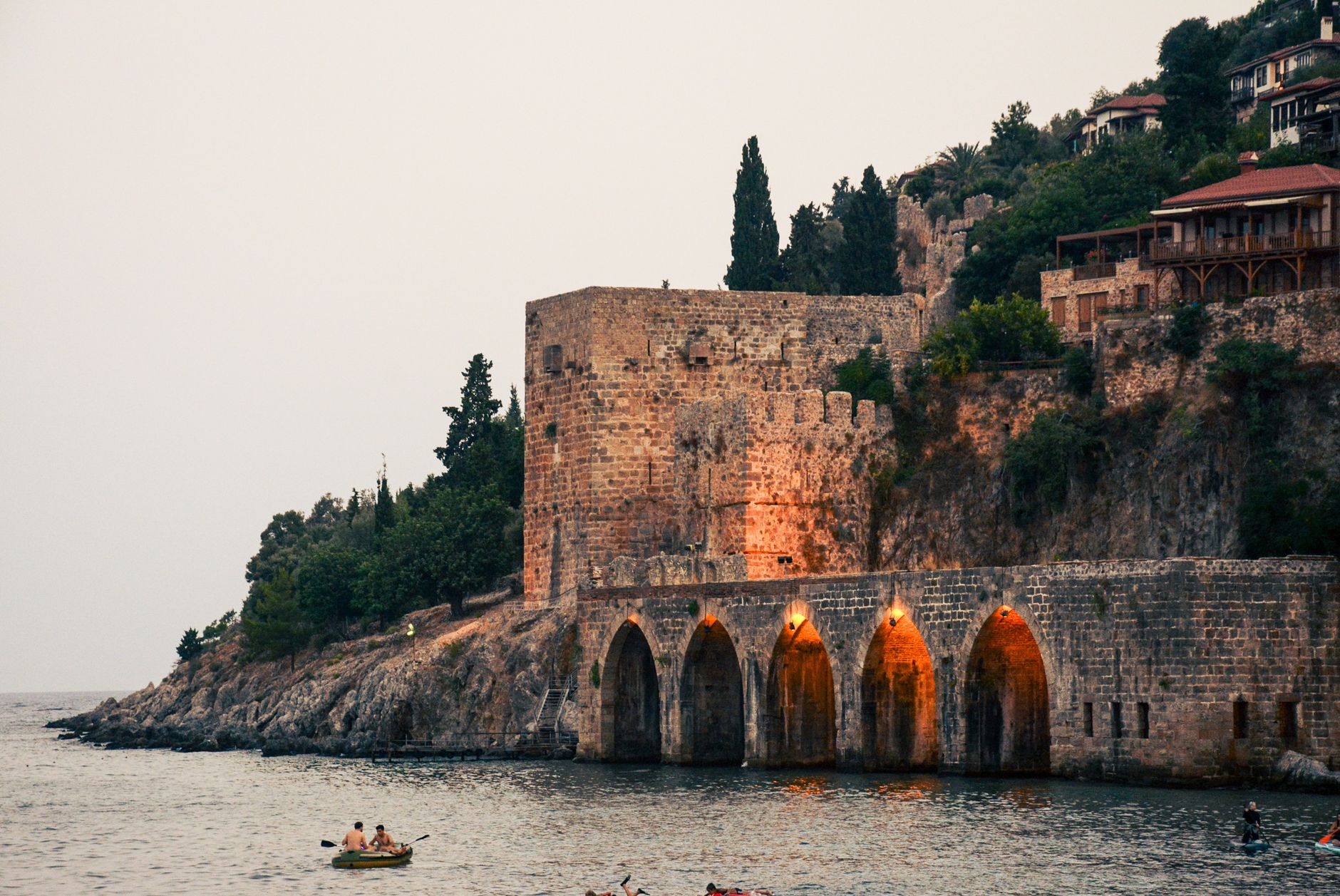
Alanya isn't just about sea and food. The castle, with over eight centuries of history, is open for visits daily. Walking up takes about 40 minutes; the cable car gets you there in a few. The bird's-eye view of the peninsula and sea is worth every effort expended. Rising in the marina, Kızılkule is the city's symbol; it was built in 1226 during the reign of Seljuk Sultan Alaeddin Keykubad.
City life takes on special color during holidays. On May 19th Youth and Sports Day, sports competitions and concerts are organized along the waterfront. Eid al-Adha is a period when family visits, treats, and the spirit of solidarity reach their peak: neighbors exchange meat and sweets, neighborhoods fill with the aroma of cooking.
The Foreign Community in Alanya
The city has a long-established community of foreign residents. This is immediately felt on the streets: multilingual signage, doctors and lawyers speaking various languages, markets selling international products. Those searching for rental apartments in Alanya or considering longer-term settlement find people like themselves here very quickly.
The issue of housing and legal status has entered the city's agenda. Residence permits in Turkey have historically attracted foreigners; Alanya, with its more accessible prices compared to Antalya or Istanbul, has always been one of the standout destinations in this regard. Now conditions are changing; Turkey is redefining the property value thresholds required for residence permits, and this affects the entire local market from real estate agencies to cafés along the Alanya coast.
Practical Information for Residents or Those Considering It
The most fundamental thing to know about life in Alanya: the city's summer and winter rhythms are vastly different. In July-August, everything is accessible but both expensive and crowded. November-March is calm and economical; however, some businesses take seasonal breaks. For peaceful yet fulfilling living, the ideal periods are May-June and September-October.
The language issue is a real barrier. In tourist areas, you can communicate in several foreign languages; however, conducting business at official institutions, the doctor, or court becomes difficult without Turkish knowledge or a translator. Investment in a few months of basic Turkish education quickly pays dividends and fundamentally changes quality of life.
- Register with the local health clinic (SGK) — opens the door to state healthcare services
- Get a Turkish SIM card immediately: Turkcell, Vodafone, and Türk Telekom are the three main operators
- When planning official business, account for holiday dates: banks and state institutions are closed during Eid al-Adha and on May 19th
- Wear water shoes in shallow sandy waters where the bottom isn't clearly visible — especially during summer season, this advice can be a lifesaver
- Dolmuş is the most practical and economical choice for getting around the city and to neighboring districts
Alanya isn't perfect, but it's real. Traffic jams toward Konakla, weever fish along the shore, banks closed during holidays... These are all part of real life, not advertising brochures. And that's precisely why Alanya continues to be such an attractive place not for two-week holidays, but for those intending a long-term, committed life.