
The City Doesn't End When the Season Does
Many people come to Alanya in July or August, spend a week by the pool, and leave with the feeling they've seen it all. In reality, they've only glimpsed the tip of the iceberg. With a population of approximately 350,000, Alanya is a vibrant city that doesn't slow down in October or February.
The winter here is remarkably mild: temperatures rarely drop below 10°C, and on sunny January days, you can comfortably sit on a café terrace in a light jacket. That's precisely why more and more people view renting an apartment in Alanya not as a tourist option, but as a lifestyle choice—to stay long-term, spend the winter, work remotely, or change their pace of life.
The city's infrastructure continues to develop. According to recent municipal announcements, a comprehensive renovation project is expected in the Mahmutlar area, while the Dimçay development project aims for completion by 2027. For those considering property in Alanya, these developments are a significant indicator: the city is investing not just in the tourist season, but in a long-term future.
Beaches: Which One Serves What Purpose
The city's main beach, Kleopatra, is within walking distance of the center and stretches approximately one and a half kilometers. Its sand is truly extraordinary: fine-grained, light-colored, almost pure white. Legend has it that it was brought from Egypt for Cleopatra; while historians view this skeptically, the beach's beauty is undisputed. In summer, it gets quite lively.
For those seeking quiet, the right addresses are Kestel or Avsallar—neighborhoods east of the center where the coastline is longer and crowds noticeably fewer. Kestel beach is pebbly, the water crystal clear, and many local events are held here. In early May 2026, a youth festival featuring open-air cinema and concerts took place at Kestel's football field; such events occur frequently in the area, showing that Kestel has a life of its own, not just for tourists.
What You Need to Know About the Beaches
Most beaches in Alanya are open from May to October. During peak season—July and August—renting an umbrella and two sunbeds in paid sections can run around 200–350 Turkish Lira per day, though prices change yearly. Free areas are also available at all major beaches.
- Kleopatra Beach — city center, developed infrastructure, crowded from June to September
- Kestel — calmer than the center, ideal for families with children
- Avsallar — long coastline, less commercial density, popular among permanent residents
- İncekum — the westernmost beach, peaceful atmosphere, perfect for morning walks
The sea in Alanya reaches swimming temperature in May and stays warm until late October. The autumn months are particularly enjoyable here: tourists have thinned out, the sea is still warm, and restaurant prices have returned to everyday normal.
Food and Restaurants: Where Locals Eat
Along Gağarın Street and the promenade, Alanya's tourist center, restaurants line up offering menus in five languages. The food is delicious, but prices cater to European visitor budgets. If you want to eat like locals do, you need to venture a bit off the beaten path: neighborhoods like Obagöl and Topaş, or up toward the castle slopes, will do the trick.
Turkish breakfast is an experience in itself. At local breakfast spots, for 150–200 lira, you'll get about ten plates: cheeses, olives, eggs, fresh vegetables, honey, kaymak (clotted cream), bread, and unlimited tea. This isn't a tourist presentation—it's an ordinary Turkish morning. Every neighborhood has such places; the secret is finding spots where workers and retirees sit at the tables, not tourists.
Markets and Local Delicacies
Markets in Alanya are set up on specific days according to neighborhood. The central market opens on Friday, Mahmutlar market on Saturday, and Oba market on Friday. Here you can find fresh vegetables, greens, cheese, and spices well below supermarket prices.
For those living here long-term, the market isn't an exotic experience; it's an integral part of the weekly routine. In summer, a kilo of tomatoes costs 10–15 lira, eggplant and peppers are sold for next to nothing, and you can buy local white cheese directly from the producer.
Documents, Residence Permits, and Daily Life Realities
The residence permit issue is one of the most discussed topics among foreigners living in Alanya. In recent years, some neighborhoods have been closed to new residence permit applications due to high foreign population density. According to information shared by the Alanya Chamber of Commerce and Industry in May 2026, this matter has reached its final stage at the state level, and changes may be expected soon.
This is an important detail for those considering combining renting an apartment in Alanya with official residence permits. Since restricted neighborhoods change from time to time, the most reliable way to learn the current list is directly from the population directorate or a lawyer who works with foreigners.
What You Need to Know About Daily Life
Living in Alanya requires basic Turkish language skills—not for communicating with the tourist sector, but for dealing with official institutions, health centers, and neighbors. While English is understood in the center, you shouldn't rely too much on it in Mahmutlar or Oba.
- Healthcare: State polyclinics can be used with SGK insurance or private health insurance
- Transportation: Dolmuş minibuses operate on main routes and cost 10–15 lira per trip
- Utilities and bills: For a small apartment, electricity, water, and internet average between 2,000–3,500 lira monthly
- Mobile communication: A foreign-registered phone will be blocked after 90 days if not officially registered
For those considering Alanya as a long-term living base, it makes sense to evaluate rental apartment options in less touristy neighborhoods; there it's quieter, more affordable, and much easier to feel the city's real rhythm.
Activities and Nature: What to Do Beyond the Beach
Alanya is built at the foot of the Taurus Mountains, and this location offers possibilities most tourists aren't even aware of. The Dimçay River, just a few kilometers outside the city, is where locals go to catch their breath on weekends: fish restaurants line the waterside, boats can be rented, or you can simply sit for hours in the shade of trees. It's the perfect escape from the city's summer heat.
Alanya's caves—Damlataş and Tınaztepe—are open for visitors almost year-round. Damlataş is right in the city center at the base of the castle slope; admission is around 100 lira. The microclimate inside is said to benefit those with respiratory conditions, and locals genuinely come here for health purposes, not just to take photos.
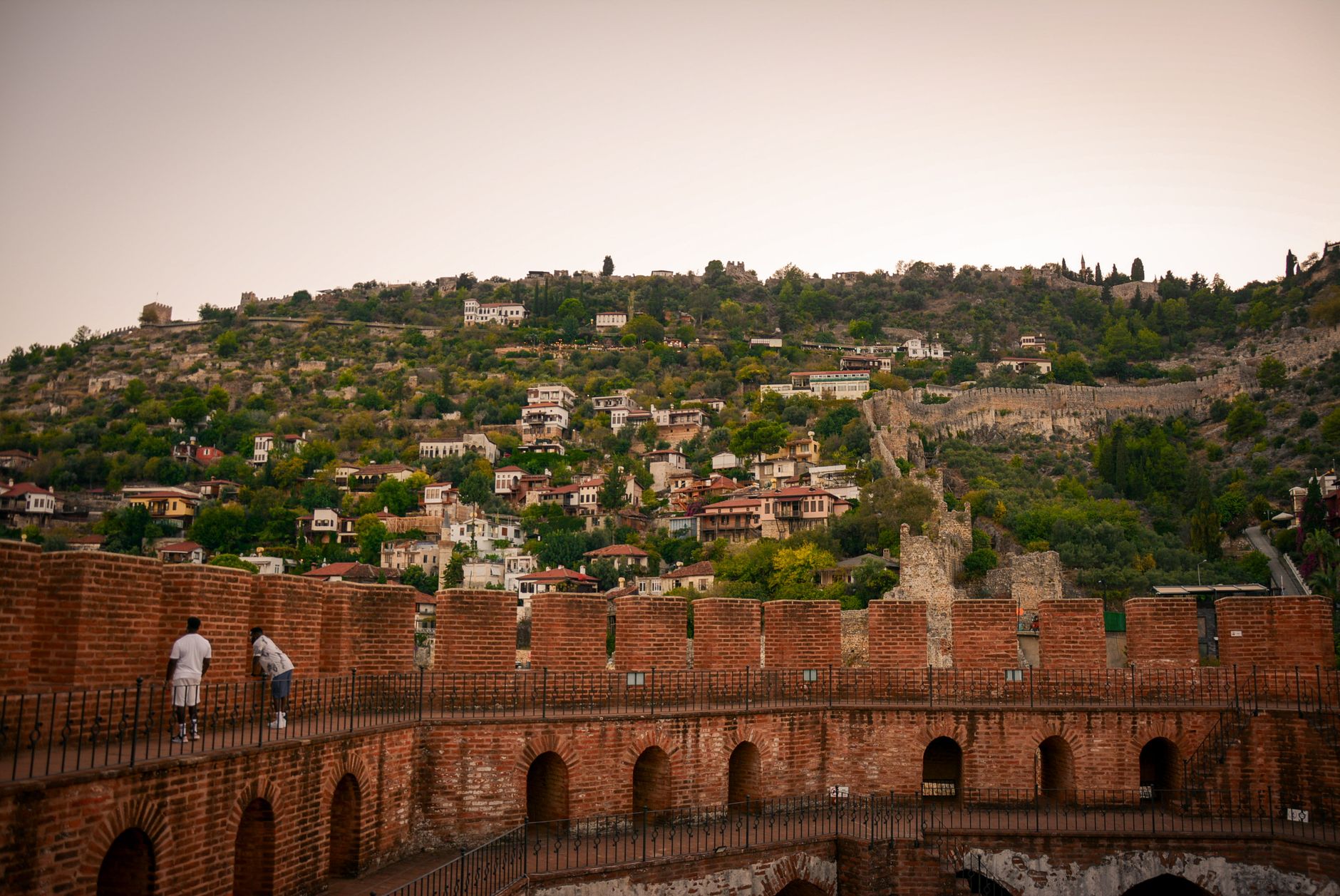
Alanya Castle, perched atop the rock, isn't just a tourist spot; it's a living neighborhood with houses and small cafés inside. Walking up takes about an hour; there's also a cable car. The view from there over the entire bay and coastline is worth every bit of effort—especially at sunset when tourists have started heading down.
Where to Start: A Practical Summary
If you're thinking of spending not two weeks but several months in Alanya, or actually moving here, start with renting. Renting an apartment in Alanya for one or two months is the healthiest way to understand which neighborhood suits you better, how local life works, and whether this city is truly right for you.
Alanya is changing rapidly right now: Infrastructure is being upgraded, new public spaces are opening up, and regulations for foreigners are being reshaped. Following all these developments from inside the city is much easier than tracking them from abroad. Alanya isn't a perfect city—but it's vibrant, authentic, and unique. That's precisely why it's so appealing not just as a holiday destination, but as a place to actually live.