
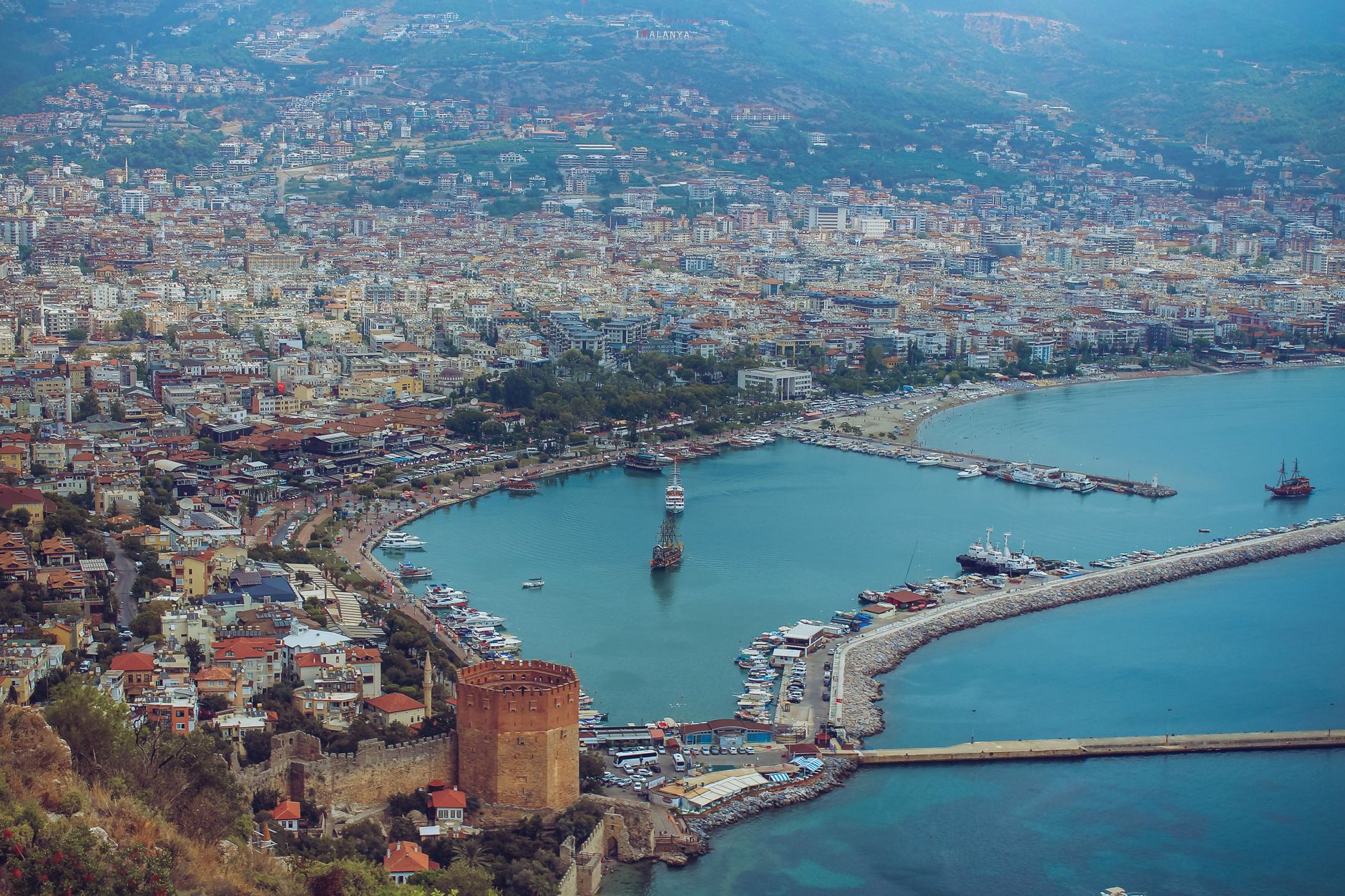
Why Alanya attracts international investors
Real estate in Alanya enjoys steady demand among international buyers from Europe, Scandinavia, the Middle East, and beyond. Located on the southeastern coast of Antalya province, the city offers over 300 sunny days a year, well-developed infrastructure, and housing that remains relatively affordable compared to broader Mediterranean standards. Unlike some boutique coastal towns, Alanya is a city built for the mass market, making it highly attractive for both personal use as a second home and as a buy-to-let investment.
Tourist numbers continue to grow, which in turn fuels the demand for long-term rentals. This keeps the housing market in Alanya consistently active, supported by both seasonal holidaymakers and expats who have relocated permanently. Real estate investments in Alanya are characterized by a relatively low entry threshold: in new developments, studios and one-bedroom apartments can be purchased starting from 60,000–80,000 Euro, depending on the neighborhood and the construction phase.
Key advantages of the market
Alanya offers investors a combination of factors rarely found in one place: a warm climate, tourist appeal, flexible legislation for foreign buyers, and the opportunity to obtain a Turkish residence permit (ikamet izni) based on property ownership. Turkish law allows citizens of most countries to purchase residential property without major restrictions, and the title deed registration process usually takes anywhere from one to several weeks.
- No restrictions for foreigners buying real estate in most districts
- Possibility to obtain a residence permit through the ownership of any residential property
- Developed tourist infrastructure that supports rental demand
- Lower property prices compared to Spain, Greece, or Montenegro
- Simple title transfer procedure via the TAPU office
All these factors make Alanya one of the most accessible and straightforward markets for those looking to purchase their first property abroad.
Neighborhoods of Alanya: where is it best to buy an apartment?
Choosing the right district directly affects your return on investment and property liquidity. Alanya is divided into several primary areas: the city center, home to the historic peninsula; coastal districts such as Mahmutlar, Oba, and Avsallar; and the quieter, emerging district of Demirtas in the east. Each neighborhood has its own specific target audience for renters and its own price bracket.
Mahmutlar is a densely developed district popular among a diverse international community. It features a vast number of new projects with 1+1 and 2+1 apartments, ensuring that rental demand remains strong throughout the year. Meanwhile, Oba and Tosmur attract buyers seeking a more tranquil atmosphere while maintaining close proximity to city infrastructure.
Demirtas: A promising region for long-term investment
Demirtas is located east of the center and, until recently, has been relatively undervalued. The construction of modern residential projects and the improvement of road infrastructure make this area particularly attractive for investors focused on capital appreciation. As with any developing area, it is important to note that planned technical maintenance occasionally occurs; for instance, scheduled power outages took place in Demirtas in April 2025, which is considered standard practice during the expansion of municipal infrastructure.
- Lower entry prices compared to the center or Mahmutlar
- Active construction of new residential projects with modern layouts
- Relatively lower building density and better environmental conditions
- Potential for asset value growth as infrastructure develops
For investors with a 3–5 year investment horizon, Demirtas can offer higher capital appreciation than the already saturated coastal districts.
Rentals and yields: real figures
Renting out an apartment in Alanya can provide owners with an annual yield of 5% to 8% through short-term rentals during the tourist season, while long-term rental yields are slightly lower. The high season lasts from May to October, during which one-bedroom apartments in coastal areas can generate between 600 and 1,200 Euro per month, depending on the location and interior quality. While the winter months are less lucrative, the demand for long-term rentals from digital nomads and retirees from Northern Europe helps to partially offset the seasonal decline.
It is important to account for property management expenses: management services typically cost between 15% and 25% of the rental income. Additionally, one must factor in monthly maintenance fees (aidat), rental income tax, and costs for interior refreshing between stays. With proper management and a carefully chosen property, net yields remain highly competitive compared to other European markets.
Comparison of short-term and long-term rentals
Short-term renting through platforms like Airbnb provides higher income but requires active management and may not be suitable for every complex—some homeowners' associations place restrictions on short-term stays. Long-term rentals, by contrast, offer stable cash flow with minimal operational costs and less property wear and tear. The choice of strategy depends on the owner’s personal preferences and the specific characteristics of the property.
Turkish residence permit through real estate
One of the primary incentives for buying property in Alanya remains the ability to obtain a residence permit in Turkey. The residence permit (ikamet izni) is issued provided you hold a title deed to residential property of any value, granting the right to legally reside in the country, access healthcare, and open bank accounts. The permit is issued for one year and can be renewed multiple times.
A higher threshold is set for obtaining citizenship through investment: this requires an investment of at least 400,000 USD in real estate and maintaining ownership for at least three years. This is a separate tool for investors with significant capital, whereas the residence permit is open to a much wider range of buyers. The processing time for a residence permit application usually takes between one and three months.
What is required to obtain a residence permit
The documents required for a residence permit application include: a passport, a title deed (TAPU), a lease agreement or proof of residence, photographs, and health insurance valid throughout Turkey. All documents are submitted via the e-ikamet electronic appointment system. Most real estate agencies serving international buyers provide consulting support at all stages of this process.
- A valid TAPU for a residential property issued in the applicant's name
- A passport with an expiry date exceeding the requested residence permit duration
- Health insurance covering the entire period of stay
- Proof of sufficient financial means to support oneself
- Photographs in biometric format
Practical tip: Before applying for a residence permit, ensure all your details are correctly recorded on the TAPU and keep copies of all submitted documents—this will significantly simplify the renewal process.
How to buy an apartment in Turkey: step-by-step process
The procedure for buying real estate in Turkey for foreigners is relatively transparent, though it requires a careful check of the property's legal status. The first step is selecting the property and verifying the TAPU for any mortgages, liens, or restrictions. Simultaneously, you must obtain a Turkish tax ID number, which can be done for free at any tax office in a single day.
Once the price has been agreed upon, both parties sign a preliminary sales contract, and the buyer typically pays a deposit amounting to 10% of the purchase price. The final transaction takes place at the Land Registry Office (Tapu ve Kadastro Müdürlüğü) in the presence of a sworn translator; subsequently, the Tapu (title deed) is transferred to the new owner. The state tax paid upon the transfer of ownership is 4% of the title deed value, which often remains below the actual market value.
Before signing any documents, it is highly recommended to engage an independent lawyer specializing in Turkish property law. This is of particular importance when purchasing off-plan properties during the construction phase: the lawyer will verify the developer's building permits, the terms of the land-sharing agreement, and ensure the company possesses all necessary licenses. Such due diligence is a minor expense compared to the potential losses that could arise from unexpected issues regarding the property.